

01 · Before booking
Check item eligibility and courier-specific restrictions.
Use this guide to check whether an item can be shipped and to prepare your parcel for transport. Acceptance depends on applicable law, the selected courier, service type, origin, destination, and transport mode.
Last updated · 12 Oct 2026
Glass, ceramics, mirrors and TVs are not accepted
AtlasShip does not accept glass items, ceramics, mirrors, or televisions for shipment.
Exception:desktop computers and monitors may be shipped only when properly packed by the shipper, and are carried at the shipper's own risk. The shipper is responsible for adequate packaging and protection.
01 · Before booking
Check item eligibility and courier-specific restrictions.
02 · While packing
Use a suitable box, cushioning, and secure sealing.
03 · Before pickup
Verify label, address, dimensions, weight, and documents.
Policy note:This is AtlasShip's customer-facing guidance. Carrier rules and legal restrictions may impose additional limitations. Where rules differ, the applicable law and selected carrier/service terms take precedence.
Some items cannot be shipped because of safety, legal, carrier, or operational restrictions.

Glassware, glass panels, ceramic products, pottery, mirrors, and similar breakable items are not accepted.

Televisions are not accepted for shipment.
Limited exception · Desktop computers and monitors
Accepted only when packed properly by the shipper, and shipped at the shipper's own risk.
Common prohibited or restricted categories
Common questions
Items AtlasShip does not accept
Some items cannot be shipped because of safety, legal, carrier, or operational restrictions. Other items may require prior approval, specific documentation, or an eligible service. The examples below are general guidance; do not assume an item is accepted unless the selected service permits it.
Glassware, glass panels, ceramic products, pottery, mirrors, and similar breakable items are not accepted.
Televisions are not accepted for shipment.
Limited exception · Desktop computers and monitors
Desktop computers and monitors may be accepted only when the shipper has packed them properly for transit. They are shipped at the shipper's own risk. Use robust outer packaging and sufficient impact protection. AtlasShip does not guarantee against damage resulting from inadequate packing or handling. Confirm the selected courier's acceptance requirements before booking.
Common prohibited or restricted categories
Firecrackers, fireworks, ammunition, detonators, flares, and explosive devices.
Petrol, kerosene, lighter fuel, flammable solvents, certain paints, thinners, and adhesives.
LPG cylinders, compressed gases, and certain aerosols.
Poisons, pesticides, corrosive chemicals, infectious substances, and certain laboratory specimens.
Loose or damaged lithium batteries, battery packs, and power banks may be restricted by carrier and route.
Banknotes, coins, bearer instruments, and certain financial documents.
Gold, bullion, precious stones, jewellery, and other valuables may be excluded or subject to special terms.
Illegal narcotics, controlled substances, and pharmaceuticals without required permits or documentation.
Fresh, frozen, or chilled goods, and items that need temperature control, unless the selected service supports them.
Live animals, plants, seeds, soil, protected wildlife, and related products may be refused.
Packages that leak, expose sharp objects, risk damage to other shipments, or contain falsely declared goods may be rejected.
Important:This category list does not replace the selected courier's prohibited/restricted goods policy. Restrictions can vary by route, service, packaging, and applicable law.
Pack each shipment to withstand normal sorting, stacking, and transit handling. Good packaging reduces damage risk but does not make a prohibited item eligible for shipping.

Use a sturdy, clean, dry corrugated cardboard box in good condition.
Choose packaging appropriate for the product's weight, dimensions, fragility, and shape.
Avoid boxes with holes, crushed corners, torn flaps, or weakened walls.
Padded mailers are best suited to lightweight, non-fragile items.
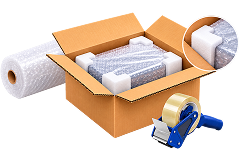
Wrap products individually when appropriate.
Cushion vulnerable areas and protect sharp edges or points.
Separate multiple items with dividers or individual wrapping.
Protect electronics from impact, moisture, and electrostatic discharge where relevant.
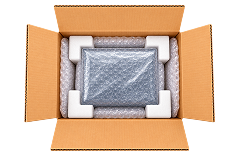
Keep the item centred and away from the outer walls.
Fill gaps with suitable cushioning so the contents cannot shift.
Provide protection on the top and bottom as well as the sides.
If the contents move when the parcel is gently tilted, add more cushioning.

Ship liquids only if the product and service are permitted.
Use suitable containers, secure closures, and leak-resistant secondary packaging.
Use absorbent material where appropriate and keep liquids separated from other goods.
Do not ship hazardous liquids without confirming acceptance and required documentation.
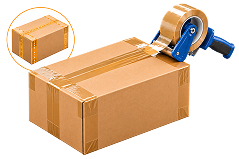
Use strong packing tape suitable for the parcel's weight.
Seal the main seams and reinforce heavier packages as needed.
H-taping can help secure the centre seam and edge seams on suitable boxes.
Do not rely on string, staples, or masking tape as the primary closure.
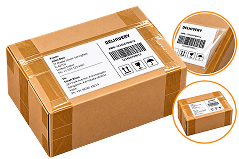
Place the shipping label on a flat, visible surface.
Check the recipient name, full address, PIN code, and contact details.
Include the sender's return address and contact details.
Keep the barcode or tracking number clear; remove or cover old labels on reused boxes.
Include invoices, permits, and declarations where the service requires them.
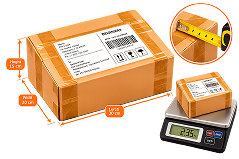
Measure the fully packed parcel at its outermost points.
Record the final gross weight and external length, width, and height.
Check the selected courier's size and weight limits.
Enter accurate measurements and check whether volumetric weight applies.
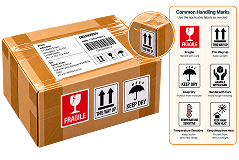
Use applicable handling labels, such as Fragile, This Way Up, or Keep Dry, where appropriate.
Handling labels do not guarantee special treatment.
Labels must not replace mandatory dangerous-goods markings or documentation.
Packing electronics: desktop computers and monitors
Because these items are accepted only as a limited exception and at the shipper's own risk, use strong outer packaging, protect screens and corners, immobilise the device with suitable cushioning, and protect accessories separately. Where possible, use the original manufacturer packaging with additional outer protection. Confirm carrier acceptance before booking.
Use manufacturer packaging where available, with additional outer protection if needed.
Protect screens and corners from impact.
Declare installed or loose batteries accurately and check carrier restrictions.
Desktop computers and monitors are accepted only when properly packed by the shipper and at the shipper's own risk.
Televisions are not accepted.
Fold garments neatly and use a clean inner bag to protect against moisture and dirt.
Choose a durable mailer or box sized to the contents.
Seal the package completely.
Confirm the item is accepted before packing.
Secure caps and closures and use leak-resistant secondary packaging.
Separate bottles and cushion breakable containers.
Check whether the contents are flammable or otherwise regulated.
Confirm carrier acceptance, route eligibility, shelf life, and transit time.
Use suitable food-grade primary packaging where required.
Protect against leakage and contamination.
Use temperature control only when the service supports it.
Use packaging rated for the load and reinforce the base and seams.
Secure the contents against movement.
Check weight, dimensions, and handling limits before booking.
Consider palletisation only for services that support freight shipments.
0 / 9 checked
Partnerships, business accounts, press or support — our team replies within one working day.
